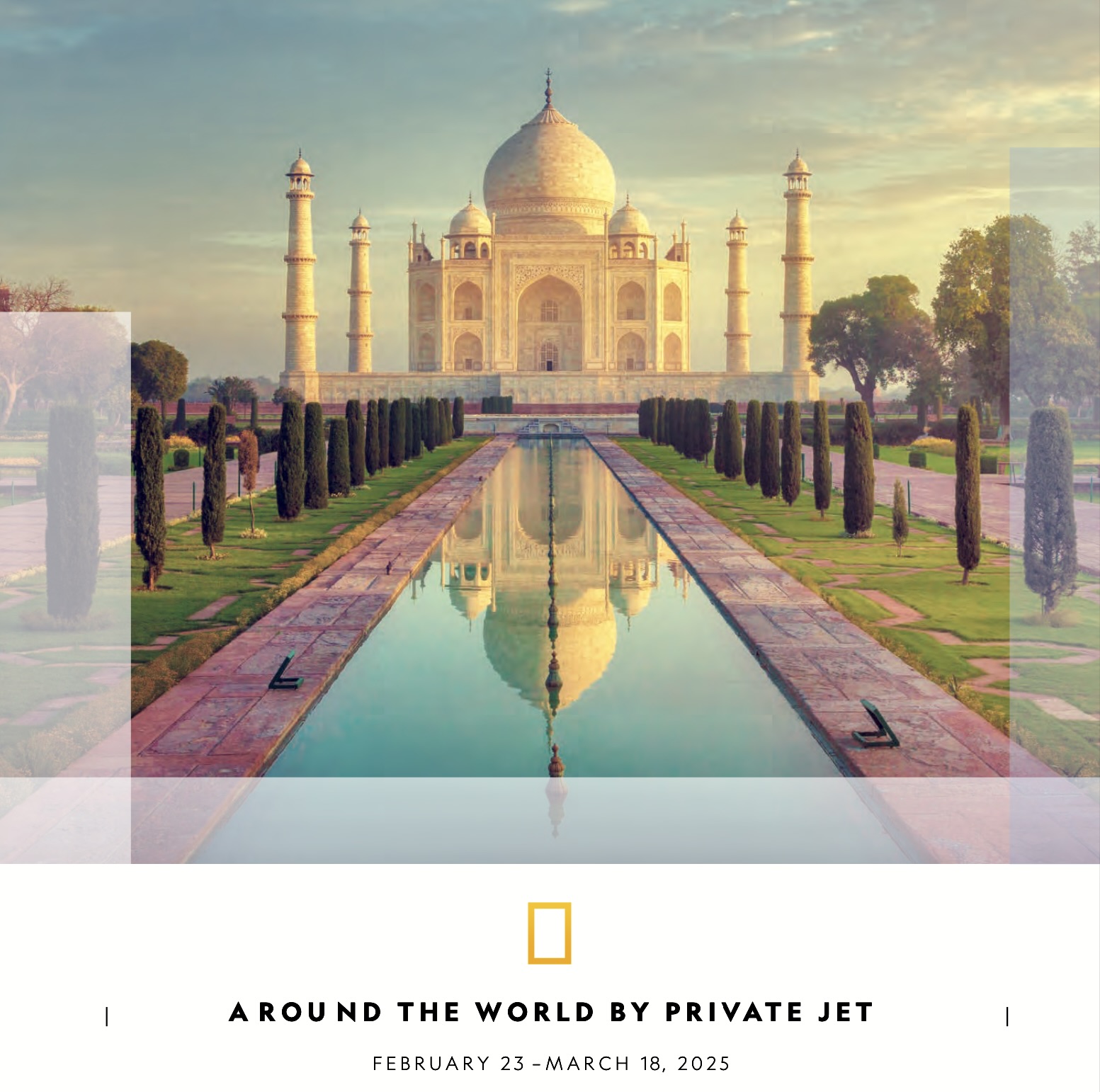
How can I summarize the epic trip we recently came home from? It was a whirlwind 24 days, circumnavigating the globe with National Geographic Expeditions (Around the World by Private Jet). A few polite sentences won’t do it justice. A paragraph can’t cover it. Perhaps a lengthy monologue? But what are words without accompanying images? It was a trip of a lifetime! So many unique experiences that took place in remarkable locations.
We started in Washington DC and visited (in order) Peru, Easter Island, Fiji, Australia, Cambodia, Nepal, Bhutan, India, Tanzania, Jordan, and Morocco and returned to DC. The average number of nights we’d stay in one location was two. There were a few one-night stays, equaling less than 24 hours in those locations. To say we were on the move is an understatement!
Our schedule was packed; we spent some days mainly in the air, flying. Sometimes, with multiple flights in a day. For those who could sleep on the plane, they did so. I’m not one of those people. But I managed the downtime the best I could. Organizing & editing photos. I wrote extensive notes about our adventure and pre-wrote social media posts (due to sheer exhaustion when the opportunity came to post). We also had in-flight lectures. Three National Geographic Experts were traveling with us. A photographer, geologist, and international correspondent. These three would share their experience and expertise on the plane via the in-flight entertainment system. Dr. Blake, a physician, also traveled with us. And a chef (part of the Icelandair flight crew) prepared our meals and snacks.
As I said, our schedule was full. The extensive itinerary was part of what led us to book this excursion—for example, the chance to snorkel in the Great Berrier Reef in Australia. Or see the rose-colored facade of The Treasury in Petra, Jordan. You need to be on the move to circumnavigate the globe and see notable sights (in 24 days, no less). However, we didn’t realize the physical toll all the time zone jumping would take. Not to mention new foods, disrupted circadian rhythm, and being at altitude (some locations 10,000 feet and above). I quickly started referring to the trip at an endurance marathon. Not to mention, some days, we spent a lot of time sitting, and other days, we crammed four workouts into one day (hiking to the Tiger’s Nest or around the cliffs of Petra). All the passengers felt the (at times) adverse effects of the trip. I don’t think anyone was spared from a disrupted GI tract or disturbed sleep cycle. Thank goodness for Dr. Blake!
We had several sunrise photo opportunities at notable locations, Easter Island, Angkor Wat, and Taj Mahal. This was an option. You could choose not to go at sunrise and go at a later scheduled time. Except for Easter Island, we got up at dawn to witness the sunrise at these locations. Our days would often have a morning and afternoon excursion. There were also additional lectures, cocktail receptions, and lovely group dinners, often with a live cultural performance (usually dance). Our Expedition Leader & Assistant Leader explained early on to pace ourselves. If you need to rest or have some downtime, look after yourself and opt out of dinners, lectures, or activities. You could not opt out of being ready and on time when we departed a location. They stressed that folks need to be on time. We would be instructed when to leave our luggage outside our door so it could be collected and often travel to the jet before us. And yes, that meant we never handled our luggage. It was taken care of for us. However, bags out were usually around 5 or 6 am (give or take). Our average departure from the hotel was 7 am (sometimes earlier). Due to the time change every other day, our circadian rhythm was WAY off. We often woke up around 3 am, unable to get back to sleep. To the best of my ability, I made sleep a very high priority.
However, traveling as a group on a private jet meant that if we were held up in traffic, the plane waited for us. The opposite is also true. If we were all boarded and ahead of schedule, we left early. How nice is that?!? It will be difficult not to be forever spoiled by this experience.
There was no need to worry about tips or gratuities. They were handled on our behalf. Should you want laundry service, it’s covered. My husband, Michael, and I had a cocktail on the veranda of our hotel in Tanzania (because the view was so stunning). When we went to pay, they informed us that, it was taken care of. We got into DC a day early, and even our room service of a burger and Caesar salad the night before was taken care of by NGE, to our surprise. We guessed that most typical things were covered as long as your “normal expenses” weren’t outrageous. NGE also did a good job of clarifying what things were not covered. For example, there was a Jean-George restaurant at our hotel in Morocco, and our meal (and gratuity) would be covered. Just don’t order Champagne or caviar.
There was no shortage of available alcohol. On the plane, at lunches, dinners & receptions. My husband and I don’t drink all that much, but we certainly do on occasion. Alcohol can affect one’s sleep, so I seldom partook. We drank Ginger Ale mostly on the jet. So much so that our flight hostess joked with us and said with a smile she would stop asking what we’d like to drink.
Michael and I figured out that we were two pretty low-maintenance folks compared to some. You can certainly ask for your super-specific coffee order at the hotel restaurant in India, or your special brand of non-dairy milk in Jordan, or a name-brand alternative sweetener in Peru. But I doubt you’ll get it. However, I did go out on a limb in Tanzania and ask for only one Eggs Benedict (because I knew two would be too much for me). When the waiter came back with two, he said the chef informed him that I had a busy day ahead of me (going out on safari) and I’d need my strength. So, I got two.
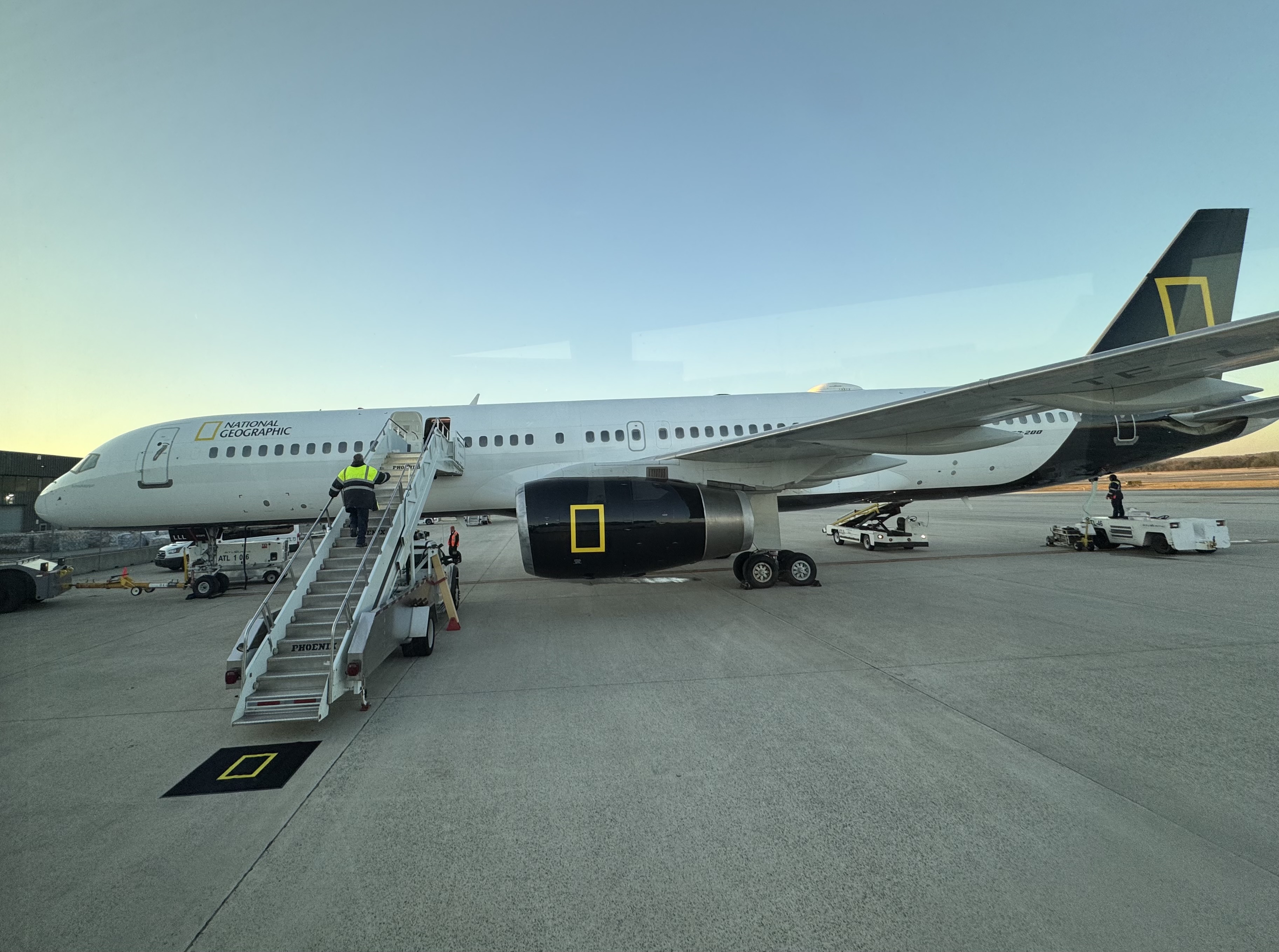
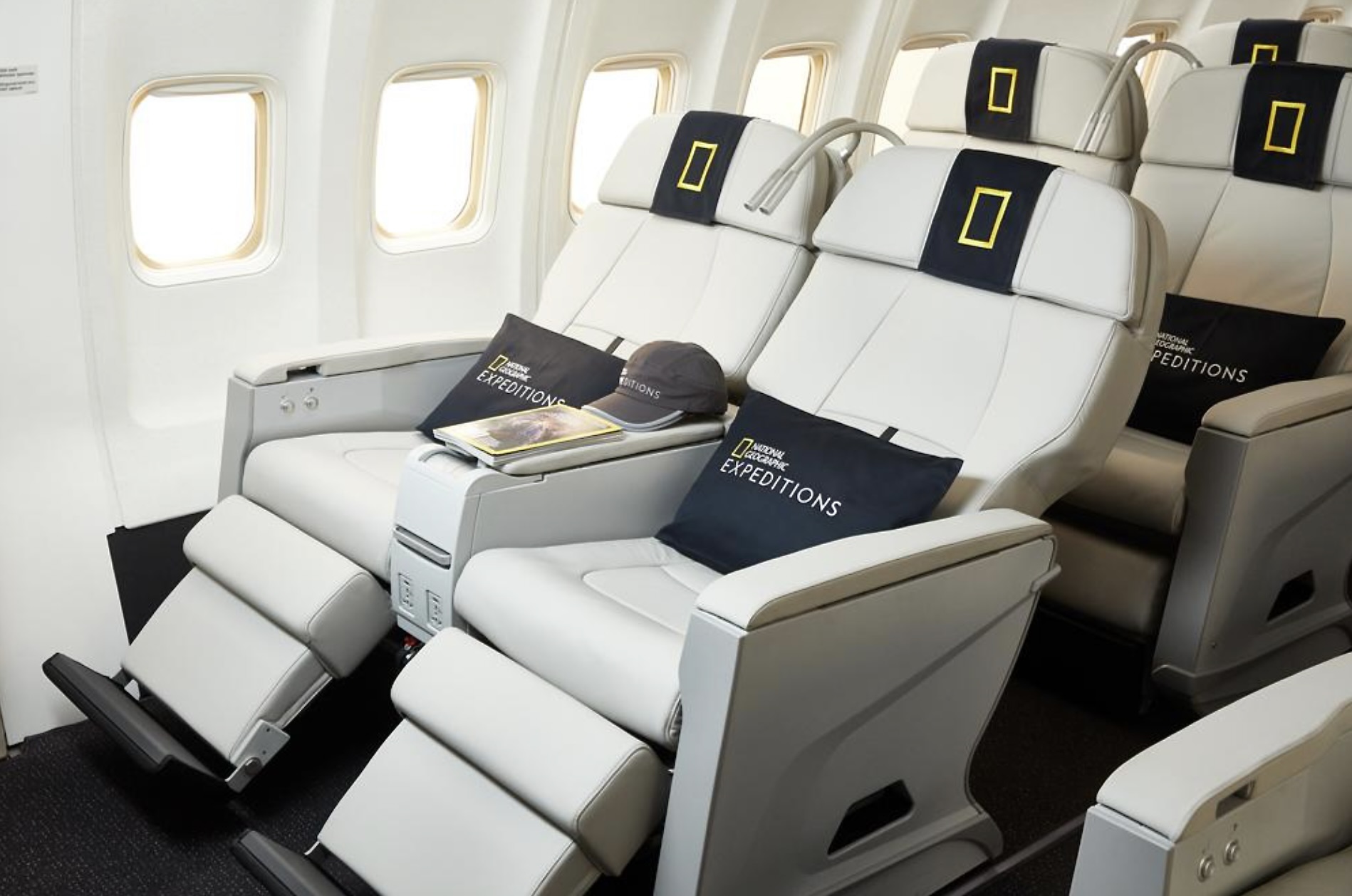
Our aircraft was a Boeing 757-200 operated by Icelandair. The seats were reconfigured in VIP two-by-two formation, allowing a maximum of 75 guests. We lucked out with only 35 guests (not including the flight crew or NG staff). This allowed our group to spread out on the jet. So much so that I regularly stretched in the emergency exit row when my hips were cranky. I even managed a downward dog when I thought no one was looking.
I’d like to stress that in each of the locations we visited, National Geographic Expeditions (NGE) hired local guides, drivers, porters, and additional logistics staff. An advanced team would arrive at a location ahead of our group, ensuring that everything was in place for our arrival.
Supporting global cultures, peoples, arts, traditions, foods, etc., is essential and part of the NGE philosophy. They, and by extension, we, were global ambassadors and supporters of the world. Conservation and education are pillars of the NGE ideology. They always have been, and they most likely always will be. I was pleased to spend the funds on this trip and not only learn “in the field” but also have educational, eye-opening experiences, gain an insightful global perspective, and support international communities worldwide.
The experience of travel provides a priceless education. Venturing outside your comfort zone, outside your city, your state, and your country, offers invaluable knowledge of how other people of the world live. This, in turn, teaches us about ourselves. We grow more compassionate as humans and fellow citizens of this shared earth.
I am beyond grateful to have been a global ambassador. I contributed to conservation, education, and opportunities for local people around the globe and learned along the way. This trip was a masterclass in cultural diversity, and I am so thankful for the opportunity.
Stay tuned for Part 2
 labuznik
Leave a comment